
Rapid Deployment
Wireless architecture enables quick, easy deployment of integrated sensor packs near the riverbed — eliminating the need for extensive riverbank or shore infrastructure.
Environmental monitoring is crucial in combating pollution in surface water — rivers, lakes, reservoirs and coastal waters. Global initiatives like the UK Environment Act 2021 are driving the need for robust, continuous, wireless monitoring. EM-2Q delivers it.
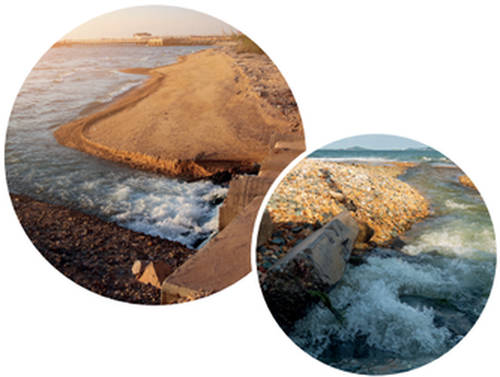
Globally, surface-water quality monitoring has become urgent as pollution rises in rivers, lakes and coastal waters. Effective monitoring is the first step in implementing quantifiable improvement programmes aimed at combating pollution.
Continuous data collection is essential for understanding pollution patterns, implementing mitigation strategies, and ensuring compliance with environmental regulations — the ability to deploy robust monitoring systems in environmentally sensitive and remote areas is critical.
Wireless architecture enables quick, easy deployment of integrated sensor packs near the riverbed — eliminating the need for extensive riverbank or shore infrastructure.
Patented Electromagnetic Field Signalling (EMFS) ensures dependable data transmission from submerged sensors to topside devices — even through ice, ground and turbid water.
Designed to be environmentally friendly and non-disruptive: systems stay out of sight and out of the way, with no adverse effects on aquatic life.
Easily integrates with multiparameter sondes and a range of sensor packs. The topside EM-2 gateway can be placed up to 100m away for flexible siting.
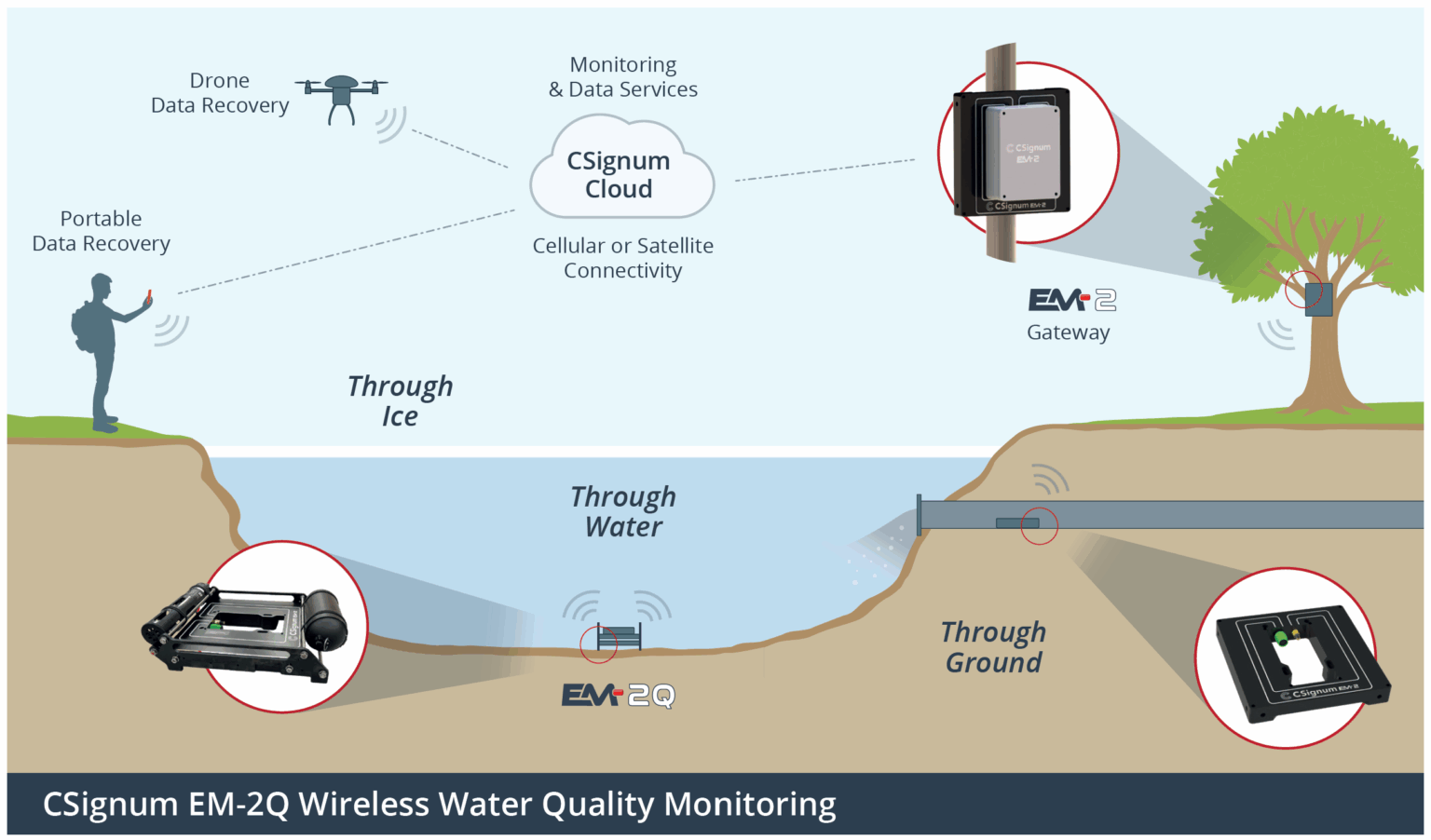
From combined sewer overflows to under-ice conditions — EM-2Q delivers real-time data from the places that matter most.
Real-time data for compliance with regulations such as the UK Environment Act 2021. EM-2Q eliminates the riverbed gateway — data is published wirelessly, up to 100m from the riverside.
For broader environmental studies where real-time data isn't required, an EM-2Q communications system carries data to a topside gateway on demand — no diver retrieval, minimising tampering risk.
Ideal where data retrieval via drone is most effective. Airbag-recovery technology floats the unit to the surface on demand, then re-submerges — concealed, secure and rapidly redeployable.
Pollution tracking and compliance with global environmental regulations including the UK Environment Act 2021.
Continuous monitoring of marine ecosystems around wind farms, helping mitigate environmental impacts.
From offshore energy infrastructure to underground mining and tunnelling operations.